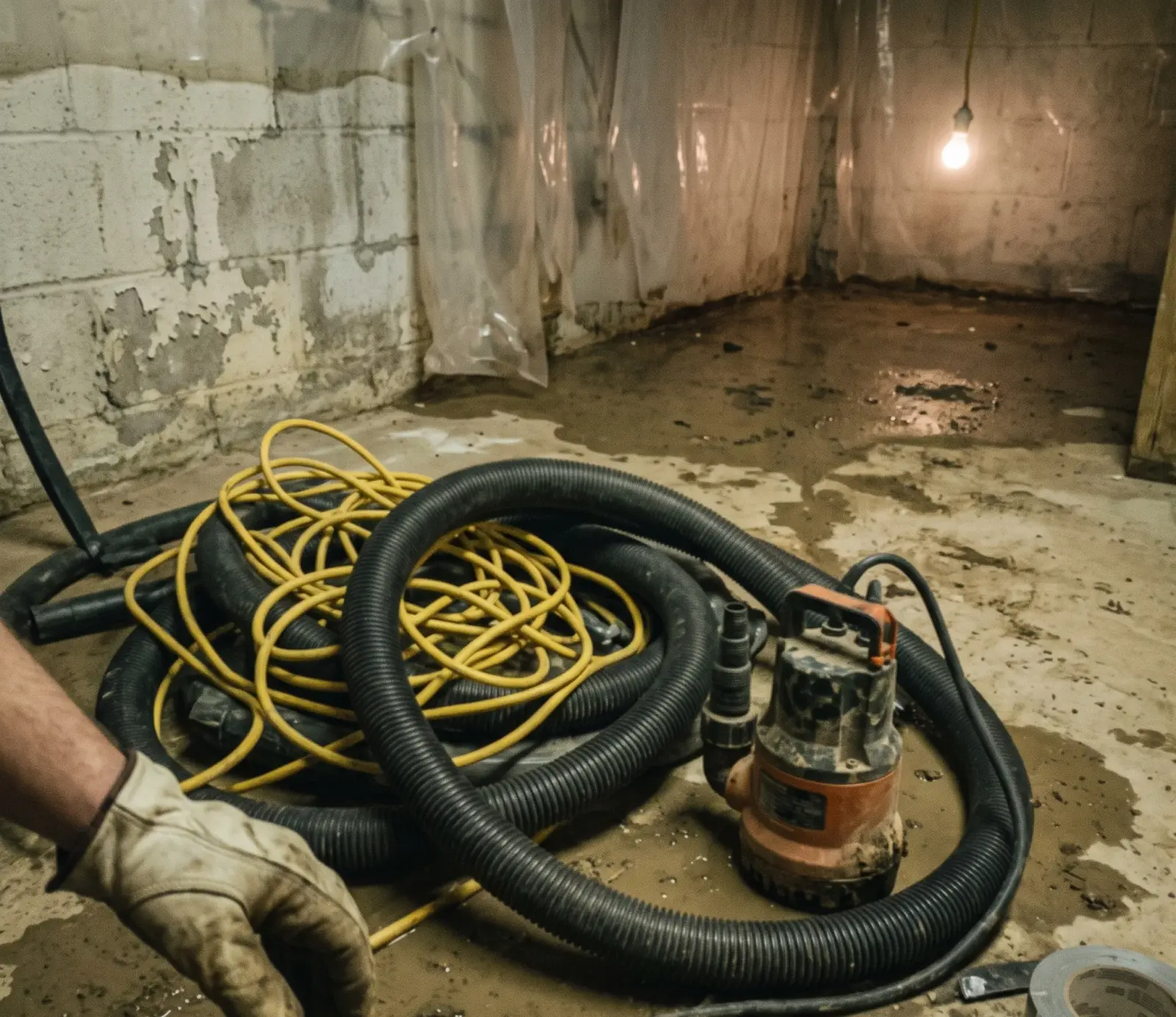
How Submersible Pumps Handle Deep Pools
Cost depends on depth, volume, placement, and hose route; this guide follows water from pool to discharge.
Crews use a submersible pump when water forms a deep pool that can be gathered at one low point and sent through a discharge hose. Scattered shallow water or debris near the pickup may favor a wet vacuum instead.
Observe Where Water Collects
Cost for submersible pump water removal shifts with water depth, the area involved, and the route available for the discharge hose. A submersible pump is a unit made to work underwater: its intake draws water in, and its outlet sends it through a hose. The discharge hose needs a workable route to carry collected water away from the unit. Look first at the waterline, then at how far it extends. Compare those observations with the likely volume before judging whether this equipment fits.
Depth and spread describe different parts of the job. A narrow, deep depression can hold less water than a broad room with a lower level. As the waterline drops, the intake may lose access before the floor is clear. Observe where the level is highest and whether it changes across connected areas. A provider can use those observations to discuss pump capacity and likely operating time. The pros we connect you with can also explain how their estimate reflects the measured area and expected volume.
Placement depends on the shape and contents of the space. A level surface gives the unit a steadier position, while floor slopes can draw water away from its intake. Steps, furniture, or stored items may block access or narrow the hose path. Observe these obstacles without entering unsafe water. Then note which visible areas seem connected and whether the water collects in one low point. A qualified provider can assess where equipment could sit and whether one position can reach the pooled water.
How the Submerged Pump Draws Water
Once water enters the pump, it leaves through a discharge hose. The hose needs a route from the work area to a suitable destination. Observe possible exits and obstacles along the way; a long or winding path can affect where the pump is placed. The destination matters because released water should not flow back toward the building or create a problem elsewhere. Ask the provider to describe the route and endpoint included in the proposed work. These details help explain how the site affects equipment use.
Look at what is visible in the water before considering the intake. Leaves, sediment, and loose fragments can collect near the opening or impede flow. A pump designed for clearer water may not tolerate the same material as a model built to pass solids. Do not handle debris in standing water to inspect it. Report what can be seen from a safe position, including whether the water looks cloudy or carries floating material. The provider can decide whether the observed conditions suit a submersible pump.
As the surface falls, the intake may become exposed or sit above the remaining layer. The pump then leaves water in floor hollows, behind obstructions, or across shallow sections it cannot draw from. Watch how the visible waterline changes without approaching the equipment. A falling waterline can leave the intake with less water to draw as the pool gets shallower. The discharge hose needs a clear path while the pump collects the remaining water.
Follow the Discharge Hose Route
A suitable discharge point keeps extracted water from returning to the area being cleared. The pros we connect you with first trace the visible water across the affected floor. They note whether it gathers in one deep low area or spreads across a broad surface. That pattern shows whether one placement can draw water steadily. They inspect the pickup area for debris that could interrupt flow. They also follow the hose route to its discharge point. A long or obstructed path can change the setup. After extraction, damp materials still need separate assessment.
When the visible pool shrinks, inspect the room from a safe location for damp surfaces beyond its former edge. The waterline shows where pooled water reached, but it cannot reveal moisture inside flooring or walls. Scope notes can record damp surfaces that may need attention after extraction. Drying equipment can then be considered as a later step. Keep those observations distinct when reviewing the proposed scope: visible water removal and checking remaining moisture are different tasks.
When Depth or Debris Limits Flow
If the waterline stays steady or rises while the pump runs, observe that change and tell the provider. Water may still be entering the area, so the visible level alone cannot show how much the unit is removing. A pump transports collected water; it does not correct the source of new water. Note whether the change occurs across the whole floor or in one section. This observation helps the provider explain what the equipment can address and what falls outside the pump's role.
For a national audience, the site has pages for selected places within its covered areas; elsewhere, inquiries connect through the same referral. Coverage does not tell a homeowner which pump will suit a particular property. For that, record the water's depth and spread from a safe vantage point, note visible debris, and identify possible hose exits. Share those details with a qualified provider. The proposed equipment should account for the observed volume, intake conditions, placement options, and discharge destination.
Details to Record Before Pumping
- Observe water depth and spread from a safe position; both affect the likely volume and whether a submerged intake can reach it.
- Ask the provider to explain pump placement, visible debris concerns, and the discharge hose's route and destination.
- Note damp surfaces after pooled water recedes; extraction does not establish whether building materials have dried.
- Note where water gathers and whether its surface covers the pump intake; that depth pattern helps show whether one submerged unit can draw from a stable low point.
- Estimate the pooled volume and observe whether the floor slopes toward the proposed placement; the pump needs a workable position as the water level falls.
- Trace the hose route to its endpoint, noting distance and obstacles; discharge choices affect setup and whether removed water could flow back toward the structure.
Extraction Questions
When is a submersible pump suitable for a deep pool?
Crews consider a submersible pump when observations show water deep enough to cover its intake and a substantial volume to move. The unit sits underwater and sends collected water through a discharge hose. They also consider whether it can be positioned safely and where the hose can lead. Depth alone does not settle the choice; spread, visible material, and the path out of the space matter too.
Why can water remain after the pump stops?
As the water level drops, the intake may no longer reach the remaining layer. Low spots or shallow areas can still hold water after the pump stops drawing effectively. A suitable wet vacuum or other method may collect that remainder. The visible end of pumping also says nothing by itself about moisture held in floors or walls; those materials may need separate assessment.
What determines the discharge hose destination?
The hose should carry water to a destination suitable for the property, without sending it back toward the structure or causing trouble elsewhere. The available route, its obstacles, and where it ends all affect placement. Ask the provider to describe the intended endpoint and how the route figures into the proposed work. The right destination depends on the site and the conditions observed there.
Compare Depth, Volume, and Discharge
Check the address against listed coverage. Site conditions can shape which options make sense to compare. Compare depth, volume, and discharge options.
Call (888) 369-0191