Emergency Water Extraction Warning Signs in the United States
Cost follows the area reached, the materials affected, and whether moisture remains after pooled water is removed. Emergency Water Extraction clears standing water, but cannot trace or fix the source; floors and other materials may stay damp. Note where water collects, and avoid areas where outlets or equipment may be wet. A musty smell can signal damp materials even when no water is visible. Ask for an estimate that lists extraction separately from proposed next steps.
Finding water on a floor does not show how much remains elsewhere. This page follows the work from urgent water removal to the questions that come after it. Water can pass through small gaps and reach materials outside the visible puddle. Ask whether checking affected materials and drying them are included.
Before anyone checks a wet area, consider whether electricity or the building itself could make entry unsafe. Water touching powered equipment or nearby wiring can create a shock hazard. Water can also spread behind walls, where damp areas may be out of sight. A ceiling that is bowing or sagging may also be unsafe; keep people away from that space. Once conditions allow access, note where water is visible from a dry location. Tell the pros we connect you with about concerns before work starts, and ask what the extraction scope covers.
Signs of water intrusion needing urgent removal
If the water has debris or an unusual odor, mention that when describing the affected area.
| Visible signs | Possible meaning | Response timing | Related Reading |
|---|---|---|---|
| Standing Water on Indoor Floors A reflective patch of water sits at floor level, with a smooth surface and edges that may be uneven. It can appear clear or cloudy, with room lights visible in its sheen. The patch may be shallow and broad or gathered in deeper pockets near floor edges or thresholds. | Water can enter a room after a leak, overflow, or storm. Standing water indoors means water has collected on a floor. Emergency Water Extraction removes that pool. Standing water can seep into flooring and nearby materials if left in place. Separate moisture checks and drying may follow. | The concern can arise immediately if pooled water reaches outlets or equipment. Water can also affect nearby materials, even after the visible pooling has been addressed. | Ask on the call |
| Water Spreading Into Adjacent Rooms A damp path may cross a doorway as a continuous sheen, scattered beads, or a spreading mark on carpet. Its outline can bend around furniture or follow a floor’s low points. Tile may feel slick; carpet may feel heavy or cool. Nearby baseboards can look darker, with a faint line at the floor edge. | Peeling paint can signal moisture has affected a wall surface. Water crossing a doorway signals that the wet area has spread beyond its starting room, so an extraction assessment should include connected spaces. Location pages cover St Francis Wood and Miraloma in San Francisco; elsewhere, the pros we connect you with are reached through the same referral. Ask what removal includes. | If water continues entering, its boundary may advance into more flooring and materials over the next hours. Once pooled water is removed, dampness can remain beneath visible surfaces. An assessment can establish how far the water has reached and whether further drying is needed. | Ask on the call |
| Water Pooling in Multiple Rooms Separate patches or shallow sheets appear on floors in different rooms. Their edges may be sharp or irregular, with clear, cloudy, or tinted surfaces. One room may show a thin reflective film while another has deeper puddles. The water may collect along flooring seams or around furniture legs. Nearby surfaces may look glossy or dull. | Cost turns on how far the water spreads, its depth, and the flooring or other materials involved. Water in several rooms shows the wet area is not confined to one room, but it cannot show where the water entered or how far dampness extends. Water can also affect baseboards and the lower portions of walls, not just the flooring. | Water left in place can keep floors and nearby materials wet over the following hours and into the next day. Dampness may remain after surface water is gone, so removal alone does not establish that the affected materials are dry. | Ask on the call |
| Indoor Drips Collecting on Floors Individual droplets appear as glossy dots or small round marks on a hard floor. A thin film may make the hard floor look slick before droplets gather. On carpet, the spots look darker than the surrounding fibers and feel damp under light pressure. The wet marks may form beneath a wall edge or overhead surface. | Cost turns on the wet floor area, water volume, and materials affected. Drips gathering in one spot show water is still reaching that part of the room. The owner should arrange prompt removal and address any active source separately. Avoid wet areas if outlets or equipment may be affected. Water may seep beneath flooring and leave hidden dampness after the surface is cleared. | Continued dripping can enlarge the wet patch over hours, then carry moisture beneath floor coverings. That can leave a wider area needing attention even after the visible drops stop. Keep people clear if nearby electrical equipment or outlets may be wet. | Ask on the call |
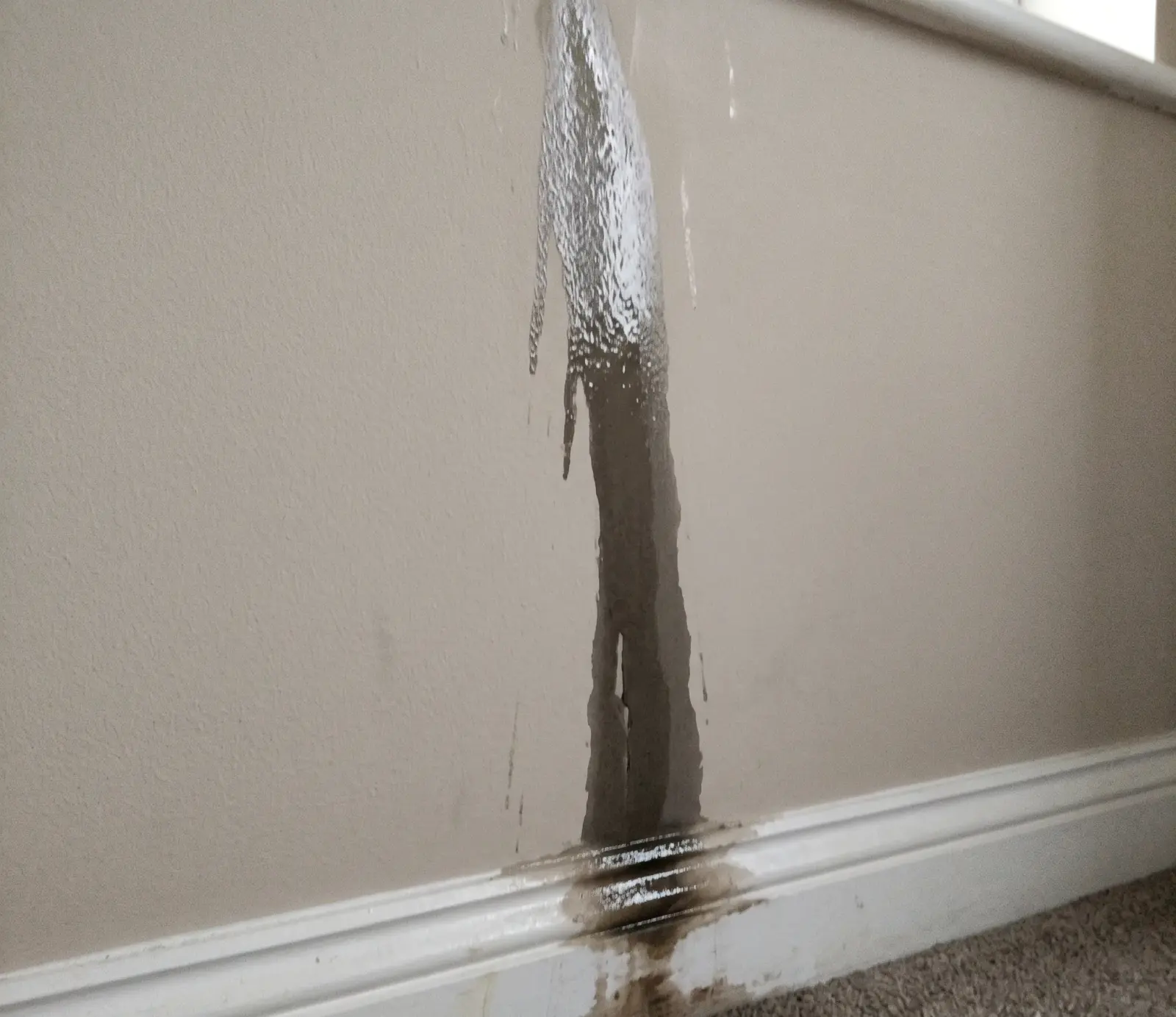
| Water Running Down Interior Walls A vertical streak may appear glossy, darkened, or uneven against the surrounding wall. It can begin near a seam, upper corner, or ceiling edge and widen as it descends. Beads may collect along its edges. The painted surface may look rippled or show a dull, discolored patch; nearby trim can look darker. | Cost shifts with the affected area and materials. A wall streak shows water descending, but its endpoint cannot show how far dampness extends across the floor. The visible run does not define the full affected area. Moisture can weaken drywall even when the visible stain looks small. | As water continues down the wall, trim and flooring can stay wet during the episode and afterward. Longer contact can spread dampness into adjoining materials. The visible track does not show how much water reached the floor or remains below its surface. | Ask on the call |
| Water Seeping From Wall-Floor Joints A thin band of moisture may follow the floor edge where it meets the wall. It can appear as scattered clear beads, a darkened line, or a narrow glossy trail. The outline may be straight along one section or uneven at a corner. The surface can feel slick or cool to the touch. | Cost shifts with the volume collected and access to the seam. Water emerging where a wall meets the floor signals active seepage, but that line alone cannot identify its source. Extraction removes pooled water; locating and repairing the source, then drying materials, are separate work. Small openings around joints or utility lines can give water a path through the wall. | As seepage continues, water can spread across the floor during the same episode and reach nearby materials. Moisture behind a finished surface may go unnoticed until the material feels soft or smells musty. | Ask on the call |
| Sagging or Bulging Ceiling The ceiling may dip below its usual plane or push down in a rounded area. The outline can be broad or sharply defined, with ripples, cracks, or a yellow, brown, or darker patch nearby. Paint or plaster may look uneven, blistered, or soft at the surface. | Across the United States, location pages serve covered areas; elsewhere, the same referral connects homeowners with pros. A ceiling that bows or drops can signal water adding weight overhead, though its appearance cannot show how much water has collected. Keep people clear and arrange urgent assessment. Water may spread above the ceiling before a visible bow appears. | If water continues entering, the bowed area can deepen and weakened material may fall with little warning. That change can happen while the source remains active. Prompt assessment helps determine whether the area is safe and what water removal is needed. | Ask on the call |
Signs worth arranging an assessment for
Visible pooling has stopped, though moisture inside materials may still warrant review.
| Visible signs | Possible meaning | Response timing | Related Reading |
|---|---|---|---|
| Wet or Swollen Baseboards The bottom trim may look darker, uneven, or rounded outward. Its top edge can ripple, while paint may blister or split near the floor. A swollen section may feel soft under light pressure. The change can appear along one short stretch or continue around a corner, with a narrow gap between trim and floor. | Work and cost turn on how much trim and adjoining material needs attention. Wet or swollen baseboards are a visible change along the wall’s lower edge; they can signal nearby water intrusion. Check the floor edge and surrounding surfaces for continuing dampness. If water is present, the pros we connect you with can assess extraction. Swollen trim may need to be removed if it no longer sits flat against the wall. | As dampness persists over the next hours or days, trim may soften further and nearby wall or floor materials may remain wet. That can widen the area needing attention. A visible change does not show how much material behind or beside the trim is affected. | Ask on the call |
| Softened Drywall Near the Floor Near the baseboard, a softened section may compress or give slightly under light fingertip pressure. Its face may look darker than nearby paint, swollen, rippled, or blistered. The soft patch may end at a distinct edge or continue along the lower wall. The surrounding drywall feels firmer by comparison. | Soft or spongy drywall near the floor means moisture may have weakened the board. The soft area does not reveal how far water traveled. The work scope turns on whether standing water remains and which materials are still damp. A homeowner should arrange an assessment soon; the wall may weaken further if dampness continues. Extraction removes standing water, while separate assessment can identify materials that need drying. The assessment can also include the floor edge beside the damp wall. | With continued dampness, the board can weaken further over the next few days, and concealed moisture may outlast visible wetness. Arrange an assessment soon to determine whether water removal or separate drying is needed. Softness alone does not show the full reach of the damp area. | Ask on the call |
| Bubbling or Peeling Wall Paint Paint may dome into scattered bubbles, form a raised ridge, or split into curled chips. Lifted areas can have dull, uneven edges beside smoother paint. Patches may appear near a wall’s top, middle, or lower edge, and may cluster along a seam. The coating can feel brittle or slightly springy. | Cost turns on the affected area and materials. Bubbling paint forms raised spots; peeling paint lifts or flakes from the wall. These changes can follow water intrusion, but paint alone does not show whether water has collected. If a leak or visible water accompanies the change, ask the pros we connect you with to check for pooled water that extraction can remove. | An active leak can keep adding water behind the finish. Arrange a check within the day if paint is lifting alongside visible water. Delay lets the source continue feeding the affected area, increasing the water-removal work. | Ask on the call |
Extraction Questions
What does standing Water on indoor floors mean?
Water can enter a room after a leak, overflow, or storm. Standing water indoors means water has collected on a floor. Emergency Water Extraction removes that pool. Standing water can seep into flooring and nearby materials if left in place. Separate moisture checks and drying may follow.
What does water spreading into adjacent rooms mean?
Peeling paint can signal moisture has affected a wall surface. Water crossing a doorway signals that the wet area has spread beyond its starting room, so an extraction assessment should include connected spaces. Location pages cover St Francis Wood and Miraloma in San Francisco; elsewhere, the pros we connect you with are reached through the same referral. Ask what removal includes.
What does water pooling in multiple rooms mean?
Cost turns on how far the water spreads, its depth, and the flooring or other materials involved. Water in several rooms shows the wet area is not confined to one room, but it cannot show where the water entered or how far dampness extends. Water can also affect baseboards and the lower portions of walls, not just the flooring.
What does indoor Drips collecting on floors mean?
Cost turns on the wet floor area, water volume, and materials affected. Drips gathering in one spot show water is still reaching that part of the room. The owner should arrange prompt removal and address any active source separately. Avoid wet areas if outlets or equipment may be affected. Water may seep beneath flooring and leave hidden dampness after the surface is cleared.
What does water running Down interior walls mean?
Cost shifts with the affected area and materials. A wall streak shows water descending, but its endpoint cannot show how far dampness extends across the floor. The visible run does not define the full affected area. Moisture can weaken drywall even when the visible stain looks small.
What does water seeping from wall-Floor joints mean?
Cost shifts with the volume collected and access to the seam. Water emerging where a wall meets the floor signals active seepage, but that line alone cannot identify its source. Extraction removes pooled water; locating and repairing the source, then drying materials, are separate work. Small openings around joints or utility lines can give water a path through the wall.
What does wet or swollen baseboards mean?
Work and cost turn on how much trim and adjoining material needs attention. Wet or swollen baseboards are a visible change along the wall’s lower edge; they can signal nearby water intrusion. Check the floor edge and surrounding surfaces for continuing dampness. If water is present, the pros we connect you with can assess extraction. Swollen trim may need to be removed if it no longer sits flat against the wall.
What does softened drywall Near the floor mean?
Soft or spongy drywall near the floor means moisture may have weakened the board. The soft area does not reveal how far water traveled. The work scope turns on whether standing water remains and which materials are still damp. A homeowner should arrange an assessment soon; the wall may weaken further if dampness continues. Extraction removes standing water, while separate assessment can identify materials that need drying. The assessment can also include the floor edge beside the damp wall.
What does bubbling or peeling Wall paint mean?
Cost turns on the affected area and materials. Bubbling paint forms raised spots; peeling paint lifts or flakes from the wall. These changes can follow water intrusion, but paint alone does not show whether water has collected. If a leak or visible water accompanies the change, ask the pros we connect you with to check for pooled water that extraction can remove.
What does sagging or bulging ceiling mean?
Across the United States, location pages serve covered areas; elsewhere, the same referral connects homeowners with pros. A ceiling that bows or drops can signal water adding weight overhead, though its appearance cannot show how much water has collected. Keep people clear and arrange urgent assessment. Water may spread above the ceiling before a visible bow appears.
Match Water Conditions to a Next Step
A line of water on a floor or a soaked section of carpet can help the owner describe the problem. Note which rooms show visible water and which materials have changed, such as flooring or belongings. Changes in wall paint or a swollen baseboard can be useful details even without a visible pool. Ask the pros we connect you with for a written estimate that identifies the extraction work and any proposed drying. Photos and moisture readings can help keep a record of areas needing attention.
Call (888) 369-0191